An Alarming Story! A Spotlight on Alarm Watches
How alarm watches allow you to seize the day

Few watch complications are as convenient as an alarm. It can serve as either a wake-up call or a reminder to do that one thing, and it will ensure you will be on top of your game. While you can set a dozen alarms on your phone, there is still something special about having a mechanical device on your wrist to perform this function. While alarm watches have a lot going for them, in both form and function, today they represent a niche worth exploring, especially for discerning collectors looking to add what is perhaps the most practical complication out there to their collections.
Alarm clocks have been there for as long as humankind has measured time with clocks. There are even several examples of ancient water clocks that include an alarm device. In pocketwatches, they emerged in the 17th century but never became mainstream. For an innovation in this field, we had to wait until 1900. One of Glashütte’s founding fathers of watchmaking, Johannes Dürrstein, was the first to come up with a solution to produce an alarm caliber for pocketwatches in more generous quantities. That caliber also served as a basis for the miniaturized version that would power what is considered the first alarm wristwatch in the world: an Eterna launched in 1914.
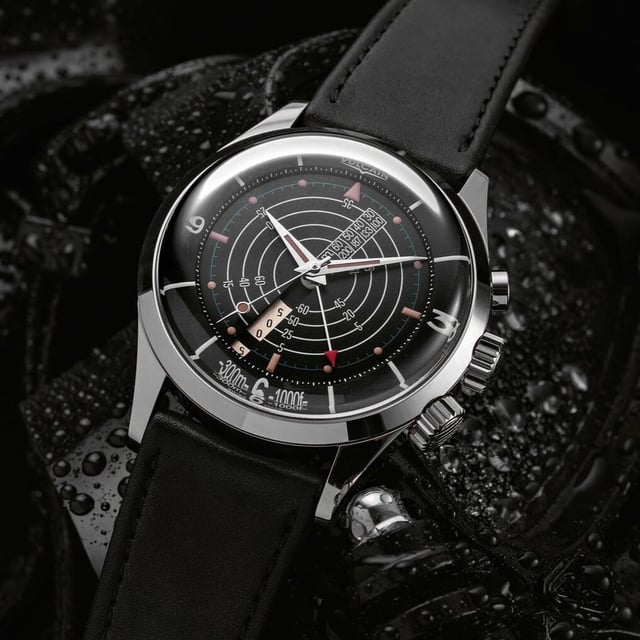
The Vulcain Cricket Nautical Heritage took the alarm complication to great depths.
Vulcain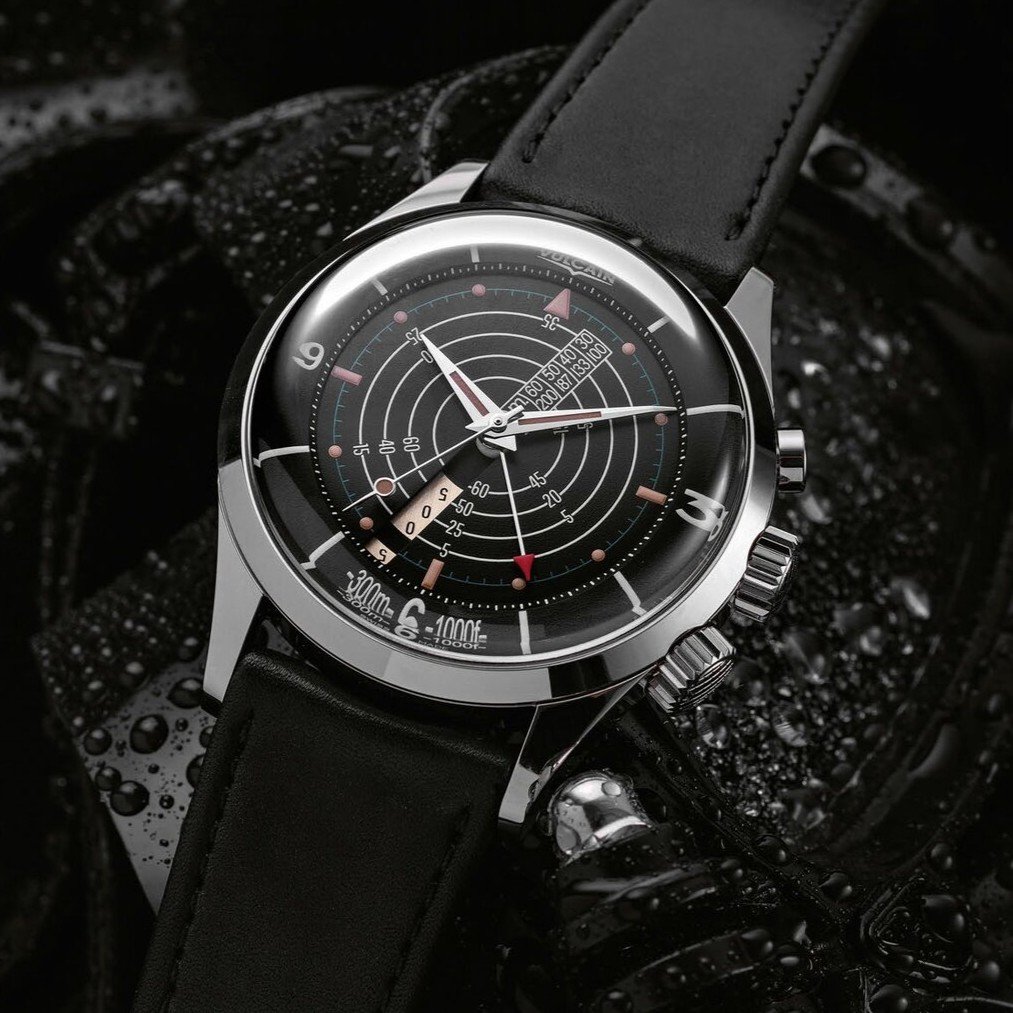
Creating an alarm watch is not without challenges. Three main obstacles must be addressed to achieve a well-functioning result. The first one is power management. Power is always a scarce commodity within the relatively small space of a mechanical movement, as you can only store so much in a mainspring. As an alarm function needs to generate quite a bit of noise, this complication is thirsty for power. That is why the first alarm wristwatch made by Eterna could only sound for about 6 seconds. This was because it drew all the power from a single mainspring. This also meant that the amplitude of the movement would drop once the alarm was in motion and that the overall power reserve would be depleted faster. While it is easy to fault the Eterna for this, it was far ahead of its time as the alarm watch wouldn’t become a more mainstream type of watch until after World War II.
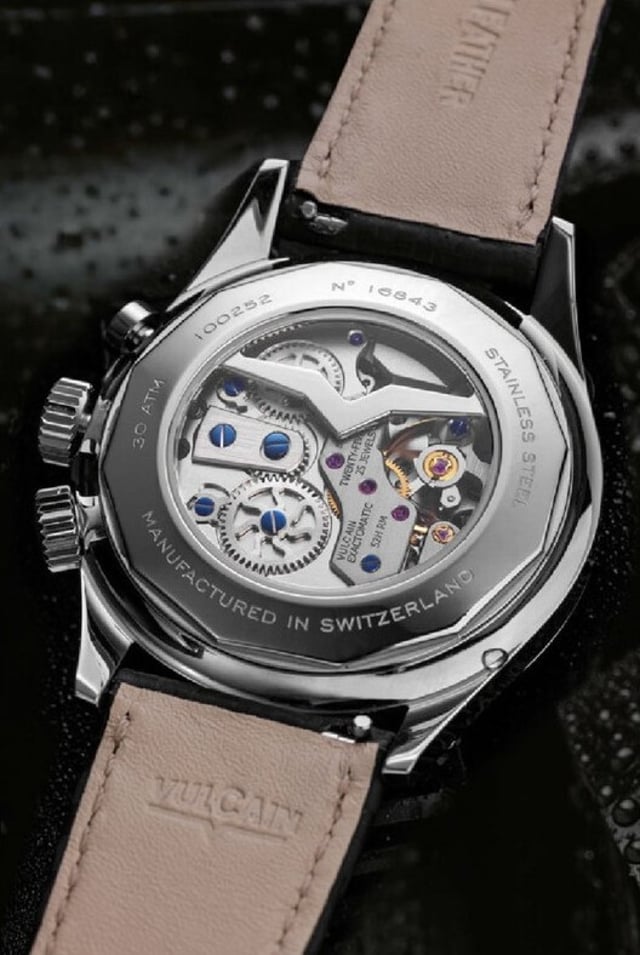
A view of the characteristic movement of the Vulcain Cricket.
Vulcain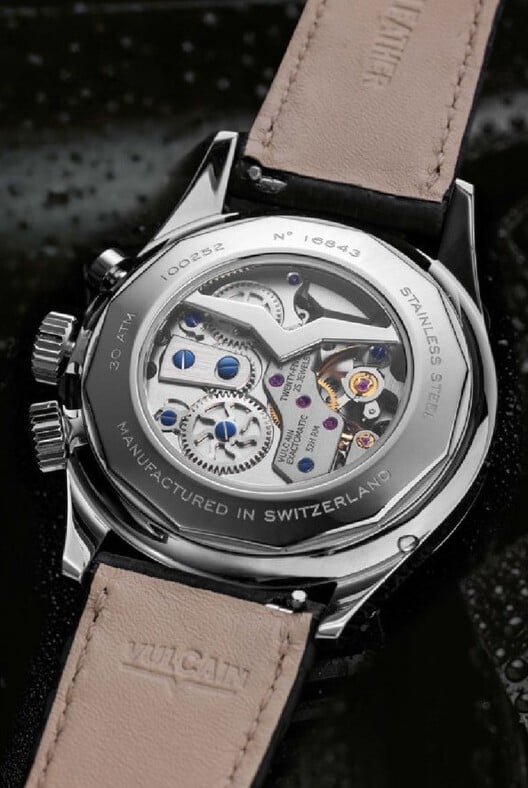
The second obstacle is generating enough noise so the alarm is easily audible. An alarm that is hard to hear is not an alarm at all, but making a loud sound come from such a small, mechanical device with another primary function to perform is a challenge. In the Vulcain Cricket, one of the benchmarks for alarm watches, this was tackled in a way devised by physicist Paul Langevin. At the request of Vulcain president Robert Ditisheim, who saw a bright future for the alarm complication, Langevin tackled the challenge by creating a small hammer that would hit a membrane. This would result in a sound quite like that of a cricket, hence the name of the watch. To amplify the sound, the caseback was perforated and carefully constructed, acting like an echo chamber. With that, the third obstacle was also cleverly addressed, as the precision of mechanical movements doesn’t do too well with vibrations. As they were now directed towards the membrane, the robust Vulcain movements were not bothered by them, but they could be felt by the person wearing the watch, creating an added alarm feature.
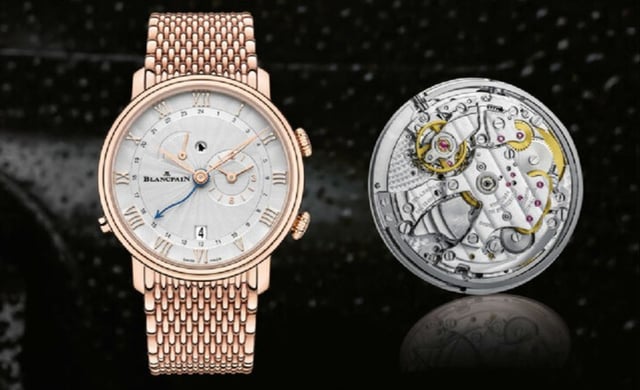
Blancpain’s Villeret Réveil GMT is an excellent example of a refined watch with practical complications. It relies on the complex Caliber 1240H.
Blancpain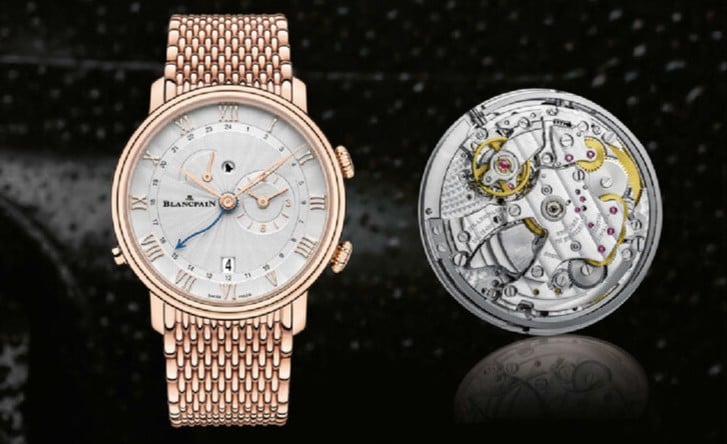
As Ditisheim hoped, the Cricket, introduced in 1947, became an incredible success for the brand, and even today, it is one of its signature models. What helped in this matter was that various U.S. Presidents also highly appreciated its qualities. While it is not uncommon for those who hold the highest office in the United States to be gifted watches, that doesn’t mean that they also wear them. The Cricket was the exception to this rule, as Presidents Truman, Eisenhower and Nixon each received one and were frequently seen wearing them. Lyndon Johnson took a different route and bought one for himself when he visited Switzerland, along with 200 more to give as gifts.
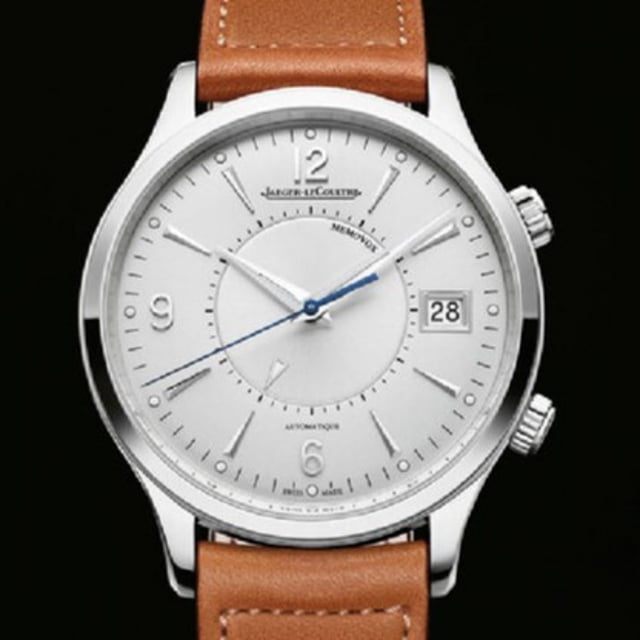
Ever since it was introduced in 1950, the Memovox has been a staple in Jaeger-LeCoultre’s collection.
Jaeger-LeCoultre
While the Cricket was highly successful, it wasn’t without competitors, the most notable being the Jaeger-LeCoultre Memovox. This timepiece was introduced in 1950 and has been a staple in the Jaeger-LeCoultre collection ever since. A signature feature of the Memovox is its two crowns. One is used to wind and set the time, while the other does the same for the alarm function. There is also no hand to set the alarm time but a convenient disk at the dial’s center. Jaeger-LeCoultre moved ahead of the competition in 1956 when it launched the first automatic alarm watch. This Caliber 815 was a so-called bumper automatic since the oscillating weight couldn’t make a full rotation as it would get in the way of the hammer hitting the caseback when the alarm went off.
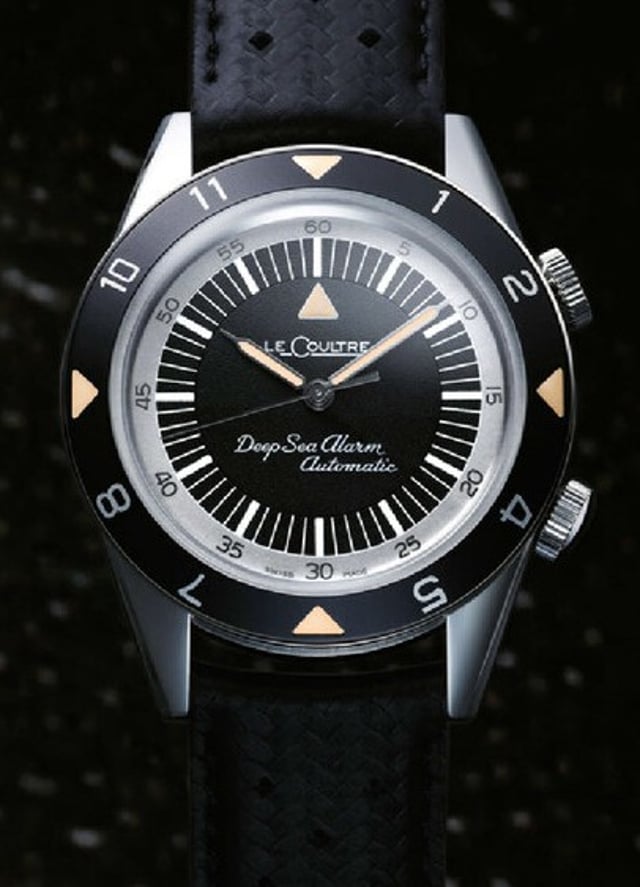
Jaeger-LeCoultre showed great care when they took the original Deep Sea Memovox (above) as an example to create the Tribute to Deep Sea (below), highlighting a unique part of its history for new generations of collectors.
Jaeger-LeCoultre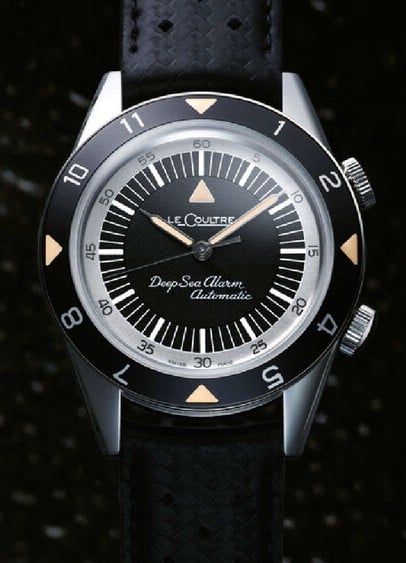
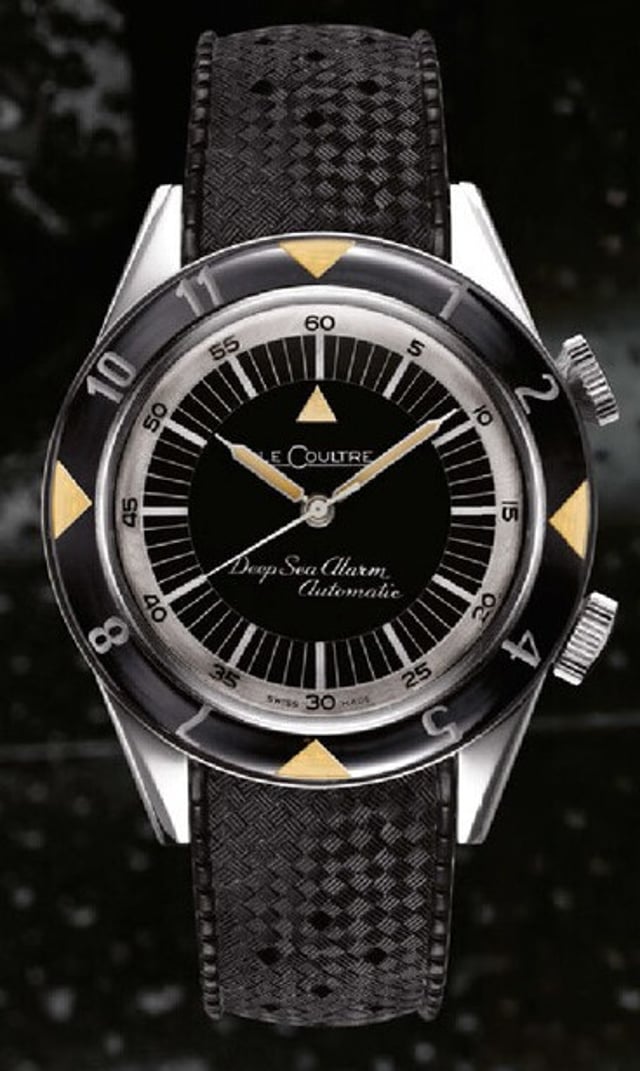
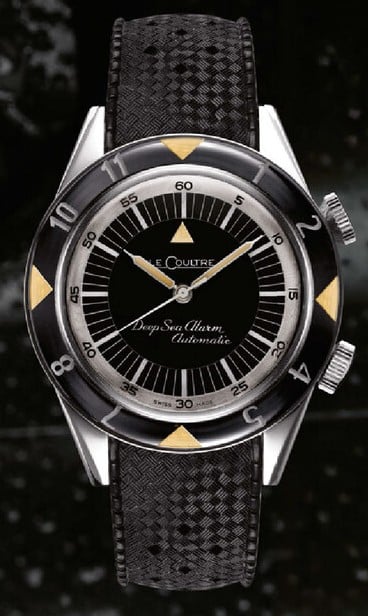
Vulcain and Jaeger-LeCoultre also ventured into the depths of the ocean with their alarm watches. Jaeger-LeCoultre launched its Deep Sea Alarm Automatic in 1959, using the alarm as an additional function to alert the diver when it was time to resurface. Vulcain was close on their tail, launching the innovative Cricket Nautical in 1961. This watch not only featured a triple caseback to optimize the sound of the alarm underwater but also showed the decompression table on the dial. A great and rather unique thing to note is that both Jaeger-LeCoultre and Vulcain still have both models in their current lineups. At Jaeger-LeCoultre, the Memovox is part of the brand’s prestigious Master Control Collection. Here it shows the staying power of the original concept, as apart from a slightly larger case size and technical advancements in the movement, the watch looks very similar to its vintage predecessor. At Vulcain, this is even more so, as it offers three different versions of the Cricket, all inspired by various eras of the rich history of this watch. This excludes the Cricket Nautical Heritage, which has its own collection. This watch can now even go head-to-head with its competitor from back in the day, as Jaeger-LeCoultre offers a modern diving alarm watch as part of its Polaris collection.
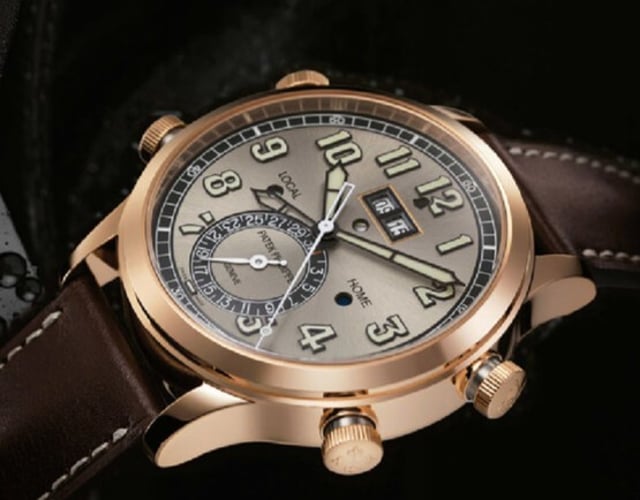
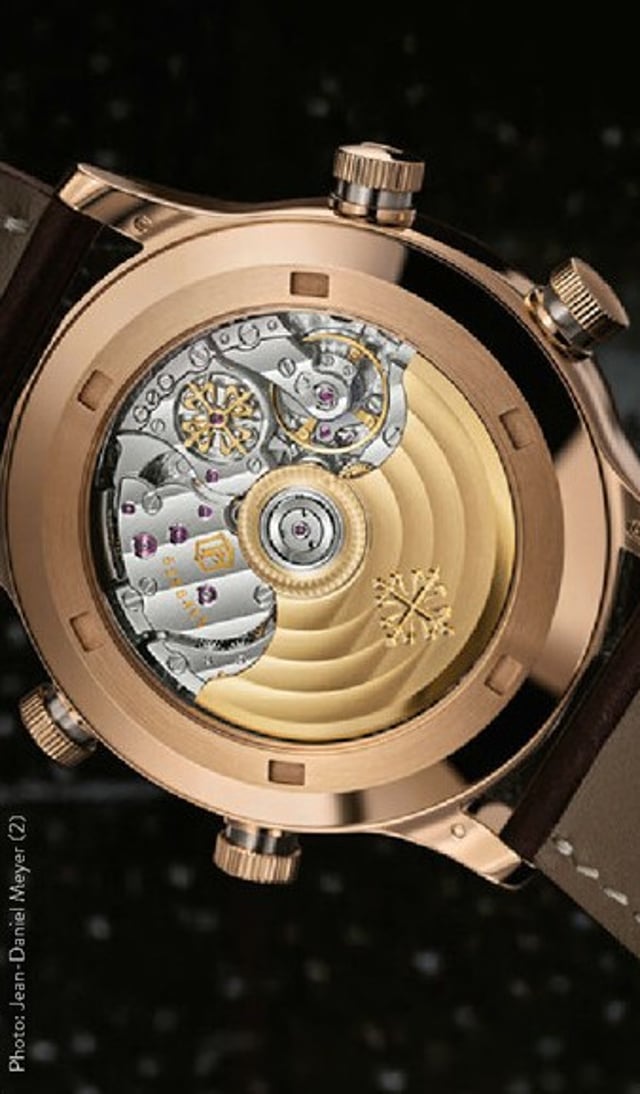
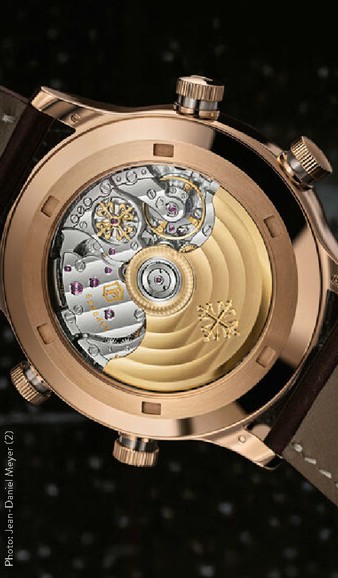
Despite o ering a great deal of information, the legibility of the dial of Patek Philippe’s Alarm Travel Time 5520RG (above) is still superb. The sapphire insert in the caseback (below) shows a clear view of Caliber AL 30-660 S C FUS.
Patek Philippe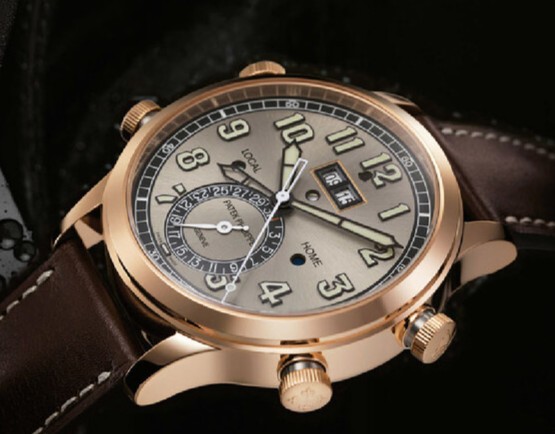
As mechanical watchmaking entered its renaissance after the quartz crisis, it was also time for alarm watches to up their game. This resulted in a few timepieces where form, function and sound achieved true symbiosis. An essential factor in this was the adoption of the gong wire, a device also used in (minute) repeating watches. While not always as loud as previous alarm watches, it added a sense of sophistication and elegance. An interesting entry in this exclusive category of watches was welcomed in 2015 with the Hublot Big Bang Alarm Repeater. This bold sports watch offered a sophisticated alarm function with an elaborate yet easy way of setting it and that crisp sound of a hammer hitting a wire gong. The hammer and part of the gong are also visible at the 7 o’clock position. Movement specialist Chronode developed the movement for the Big Bang Alarm Repeater. Those who prefer a different look but with the same movement can also turn to Cyrus. As this brand has the same owner as Chronode, it was able to use this caliber in its Klepcys Alarm Watch.
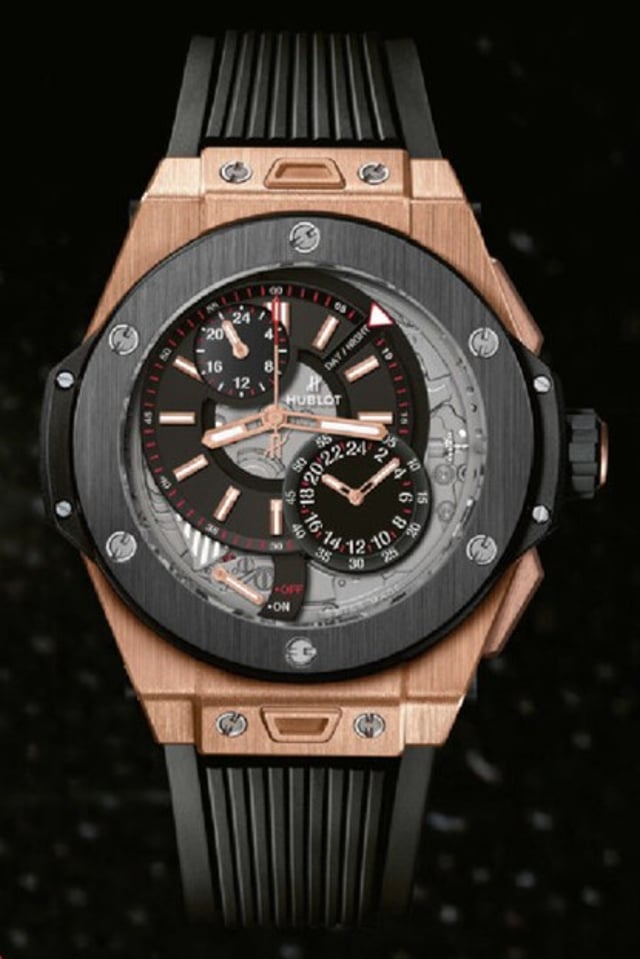
Chronode made the movement for the Hublot Big Bang Alarm Repeater, with the striped hammer that hits the gong visible on the dial side.
Hublot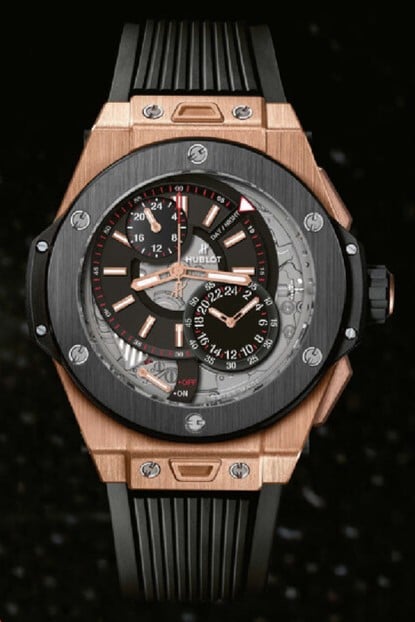
Being able to set alarms more than 12 hours in advance and with minute precision became a trend we see with other watches. Next to the Hublot Big Bang Alarm Repeater, this includes the Villeret Réveil GMT, part of the current collection at Blancpain. These modern-day alarm watches also show other advancements, such as a single oscillating weight that winds both the mainspring barrel for the movement and the alarm function. Another is the on/off function. While this sounds obvious, with most traditional alarm watches, you simply had to make sure that the spring for the alarm function wasn’t wound to prevent it from going off; now, a push of the button suffices. The use of silicon helped optimize the movement’s precision and also served as an indicator that alarm watches have advanced into the modern age.
At Patek Philippe, we even find an alarm watch in its Grand Complications collection. Like the Blancpain Villeret Réveil GMT, the Patek Philippe Alarm Travel Time 5520RG is created with the modern traveler in mind. Its expressive dial features a second time zone with day/night indicators for both the home and local time. There is even a third day/night indicator exclusively for the alarm function. Also unique is that the alarm time is indicated through a double window at 12 o’clock, truly giving this remarkable complication center stage.
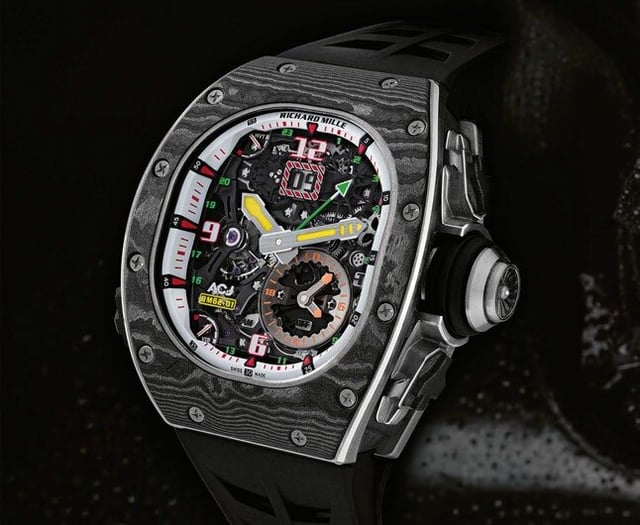
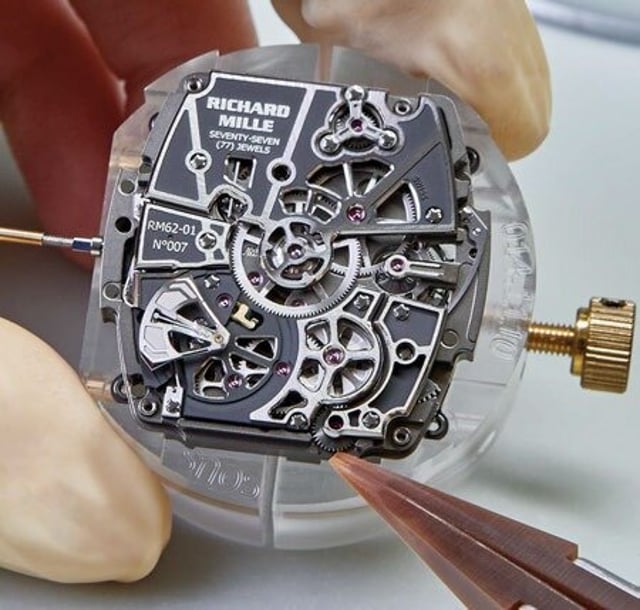
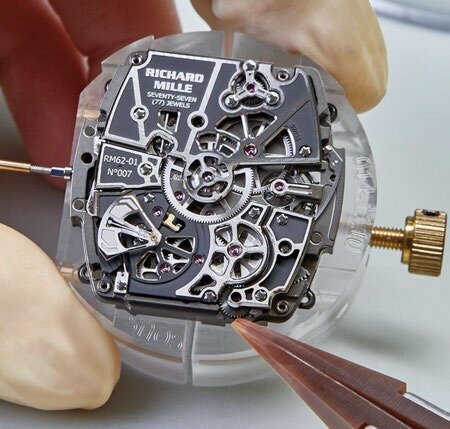
Launched in 2019, the Richard Mille RM 62-01 was a different kind of alarm watch, as it came with a vibrating alarm function that was quite discrete in contrast to the high-tech looks of the watch itself.
Richard Mille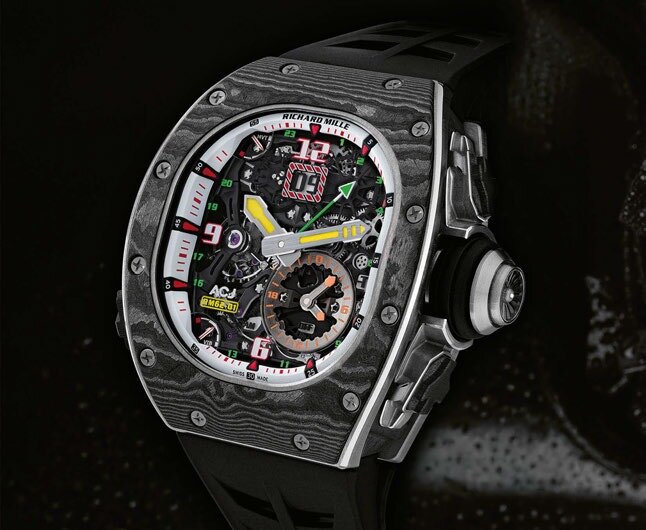
It comes with an on/off option, shown above the alarm time window, and also has a chiming alarm. This can be admired through the sapphire inset in the caseback, which gives a clear view of Caliber AL 30-660 S C FUS, a movement certified with the Patek Philippe Seal. These modern-day alarm watches not only continue the legacy set by the pioneers in this field but also represent the future of this unique and rather addictive complication.
This article was originally published in the May / June 2025 Issue. To subscribe to the print edition to WatchTime Magazine, click here.